ARIA, ARIA Scan, and Neole are now publicly available on the App Store. Each app has one clear job; together they reduce the context people have to hold in their heads.
Estuaire Studio, an independent software publisher on Québec’s North Shore, now has three products available on the App Store. ARIA, ARIA Scan, and Neole address different parts of everyday administration, but they are built around the same idea: useful software should make life more legible instead of adding another system to manage.
The three-app portfolio is deliberately small. It is not a bundle of overlapping features or a race to fill categories. Each product owns a specific moment where context is usually fragmented, forgotten, or recovered too late.
ARIA: what needs attention now
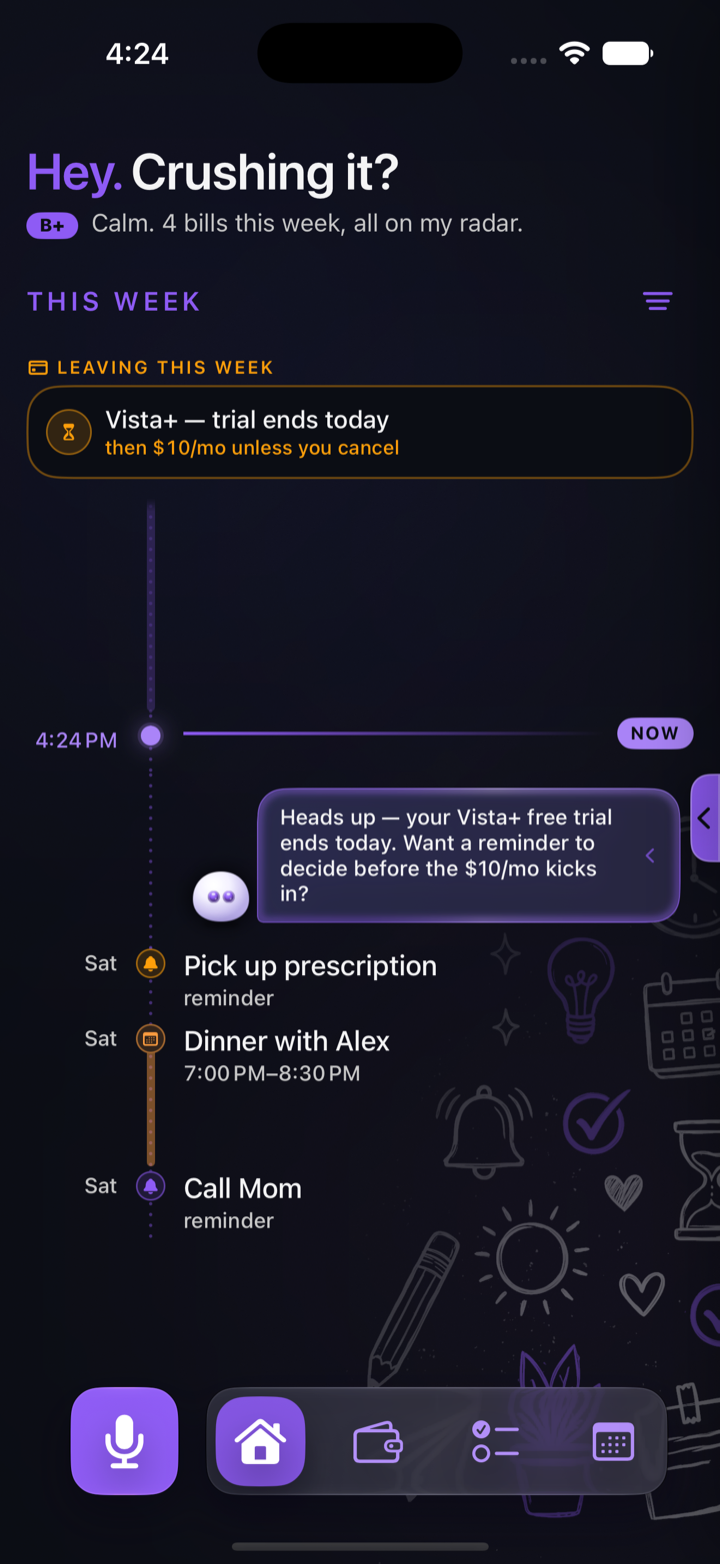
ARIA brings money, bills, tasks, and calendar commitments into one daily picture. Its safe-to-use view sets upcoming obligations and goals against available money, while Attention Radar separates what needs attention now from what can wait. The app is read-only by design: it offers context and guidance without moving money.
The product began with a practical problem familiar to anyone who keeps a budget in one app, reminders in another, and a calendar somewhere else. Each tool can be accurate while the whole day remains hard to read. ARIA’s job is to restore that shared picture.
ARIA Scan: what was bought, and what happens next
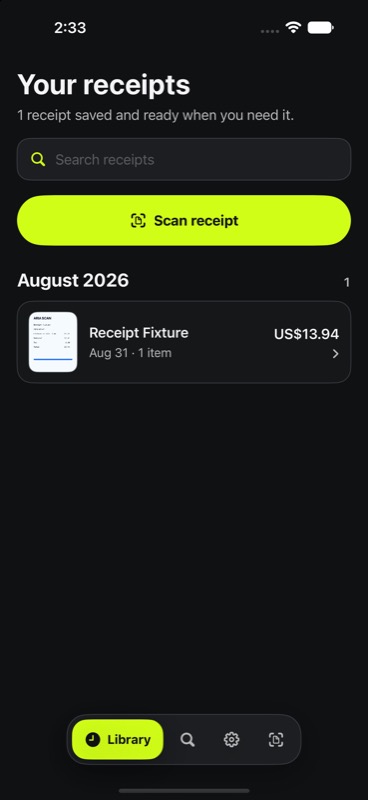
ARIA Scan turns a paper or imported receipt into a searchable purchase record. The original proof stays attached to the merchant, items, return deadline, warranty, notes, and reminders. Automatic capture waits for a readable receipt, and extracted details remain editable before they enter the purchase library.
The app’s focus begins after checkout. A receipt is useful because it can answer a later question: Can this still be returned? Is the product under warranty? Where is the proof? ARIA Scan keeps those answers close without requiring an Estuaire account.
Neole: expense capture without bookkeeping ceremony
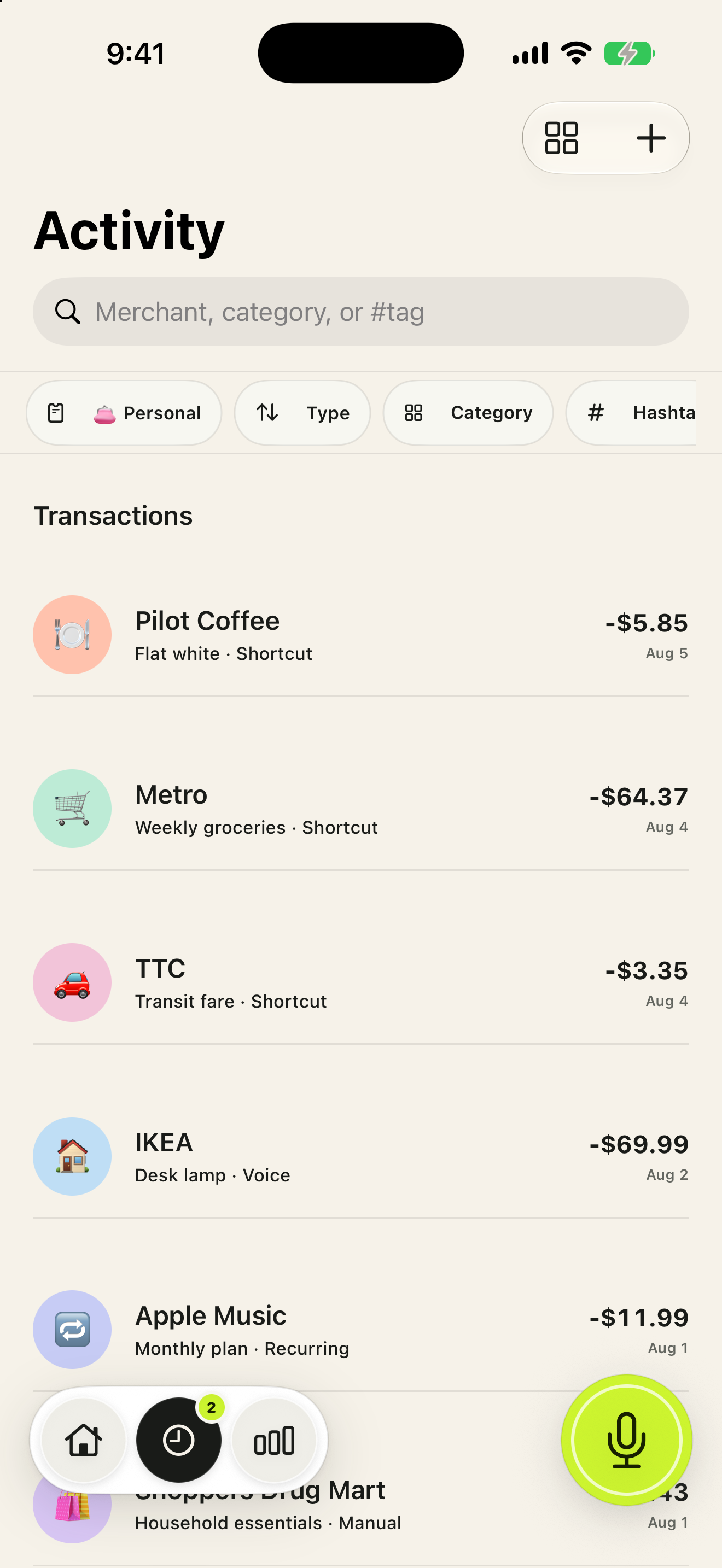
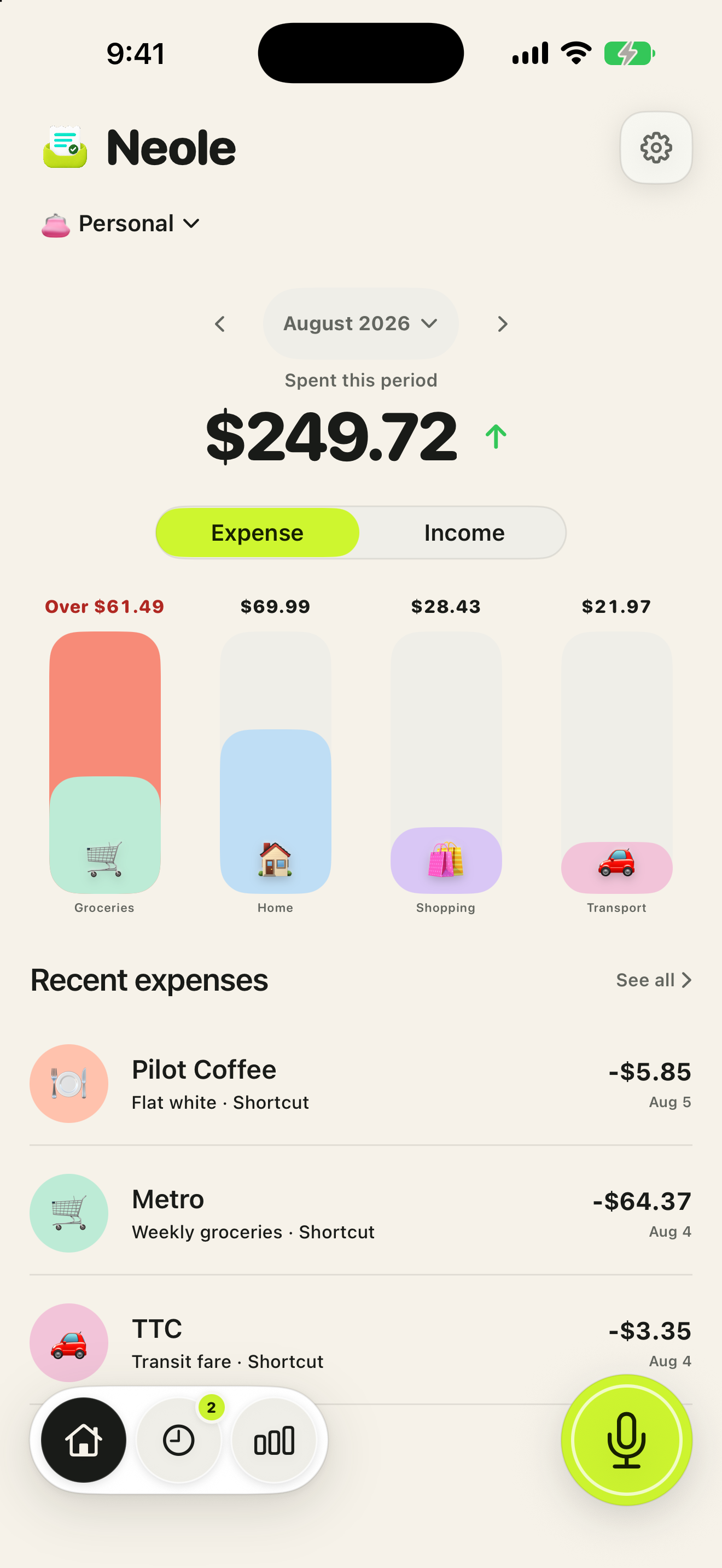
Neole is the newest public release. It captures everyday expenses by voice, manual entry, or an Apple Shortcuts automation the user chooses to configure. Each captured transaction becomes a reviewable draft before it is saved, so automation never removes the moment of control.
Separate lists can hold personal spending, a credit card, work costs, or a shared plan. Budgets, income, recurring bills, tags, search, and CSV export remain available without turning the product into a full financial institution or asking for unrestricted Wallet history.
One standard across three products
- One clear job before feature volume.
- Reviewable automation instead of silent certainty.
- Local-first handling and no advertising profile.
- Export and recovery paths that keep the user in control.
- Interfaces designed to lower the volume rather than demand attention.
Availability is a starting line, not a finish. The next phase is deliberately unglamorous: listen to real questions, fix the friction that appears outside the development environment, and earn trust through support. New products will follow only when they solve an adjacent problem and can meet the same standard.